
The Story of Sulayman and the Ant
A story of gratitude, attentive listening and using blessings with humility.

Jump to a chapter (optional)
1 Knowledge and responsibility
Sulayman was a prophet and king whom Allah granted knowledge and extraordinary responsibilities. The Qur’an tells of his understanding of the speech of creatures and of the gifts bestowed upon him and his father Dawud. Sulayman did not treat such gifts as a reason to forget Allah.

Sulayman (AS) had been granted a remarkable kingdom, but he recognised that his knowledge and authority were gifts from Allah. When he heard an ant warning the others, he smiled and prayed that Allah would help him show gratitude and act rightly. His example ties leadership to humility and responsibility (Qur’an 27:15–19).
2 The ant and gratitude
As his forces travelled, an ant warned the other ants to enter their homes so they would not be harmed unknowingly. Sulayman understood the warning and smiled. Rather than becoming arrogant, he prayed that Allah would help him remain grateful and do what pleased Him.
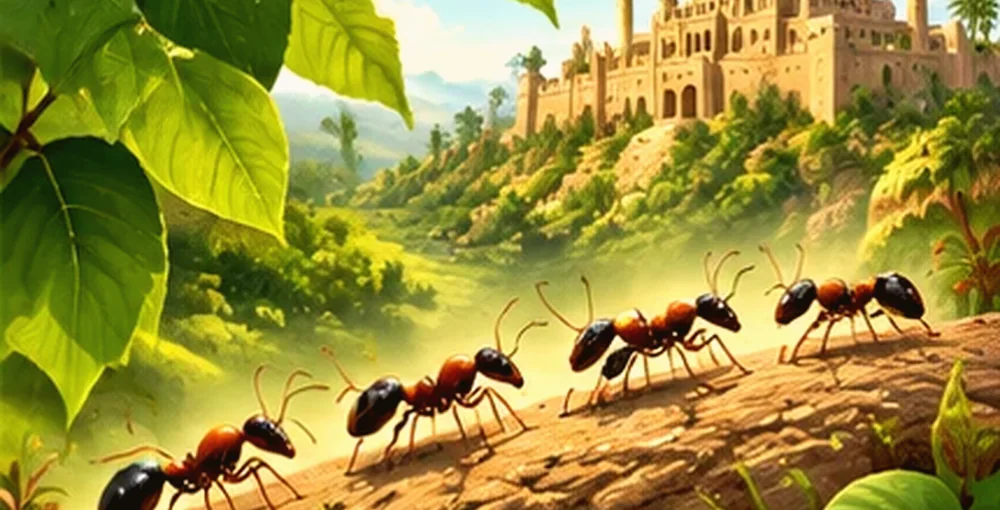
Sulayman made du‘a asking Allah to help him be grateful for His blessings and to do good. That prayer is one of the most beautiful parts of the story. Blessings are safest when they produce gratitude.
As Sulayman’s forces passed through a valley, an ant warned the others to enter their homes to avoid being harmed unknowingly. Sulayman recognised the warning and smiled. He prayed that Allah would help him be grateful for the blessings given to him and his parents and to do righteous deeds. The little creature had prompted a great leader to remember his responsibility (Qur’an 27:18–19).
3 The queen of Saba and worship of Allah
The Qur’an also tells of the hoopoe bird bringing news about the people of Saba and their queen. Sulayman sent a letter calling them away from the worship of the sun and towards Allah. The queen considered her options carefully and sent a reply. Her encounter with Sulayman became another lesson about wisdom and the difference between earthly power and divine truth.

Later, when the queen visited, remarkable events took place by Allah’s permission. She recognised that she had been mistaken and declared her submission to Allah, the Lord of the worlds. The story shows that sincere learning may involve changing one’s mind when new evidence appears.
For families, the ant story is a good beginning, but it is not the whole of Sulayman’s life. His examples include listening, gratitude, good judgement and responsibility toward people and animals. A believer who is given influence should use it carefully, not seek praise.
The hoopoe later brought news of a queen and her people who worshipped the sun. Sulayman sent a letter inviting them to Allah. The queen weighed the matter, visited him and ultimately acknowledged her earlier mistake in worship. The lesson is not simply that Sulayman possessed unusual power; it is that blessings should serve divine guidance rather than pride (Qur’an 27:20–44).
What can we learn?
Big idea: Blessings should make a person more grateful and more careful, not more proud.
Talk about the story
- What did Sulayman do when he heard the ant?
- What prayerful response did Sulayman show to his blessings?
- How can a child use a blessing with humility?
Additional family reflections from the earlier edition
Prophet Sulayman was given many blessings by Allah. He had knowledge, wisdom and a special kingdom. Yet the beauty of his story is not simply that he had much. It is that he recognised where it all came from.
The Qur’an tells us about a memorable moment when Sulayman heard the words of an ant warning the others. Instead of ignoring something so small, Sulayman smiled. He recognised the wisdom of Allah and responded with gratitude.
This is a lovely lesson for children. Sometimes people think that being important means no longer noticing small things. Sulayman teaches the opposite. Real strength notices, cares and remains humble.
Children can learn from Sulayman in everyday life. If you are good at something, say alhamdulillah. If you are given a chance to lead or help, do it gently. If someone smaller or quieter needs care, notice them.
This story also shows that leadership is not only about authority. It is about justice, mercy and listening carefully. Even a small creature mattered enough to be noticed by a prophet.
When families read this story, they can remember that every blessing—from knowledge to friendship to food to time—should bring us closer to gratitude, not further from it.
Talk together: What is one blessing you can thank Allah for today, and how can you use it well?
Check your understanding
Answer three questions about the story, then review the explanations.
Sources and further reading
How to read these sources: Qur’anic verses are the primary text. Explanations about prophetic infallibility and other doctrines follow Twelver Shia interpretation. The child-friendly dialogue and reflections are adaptations, not quotations from scripture or hadith.
Chapter-by-chapter Qur’an guide
Read the linked Qur’anic passages for the events described. Some chapters draw on more than one passage; the links are starting points for reading the scripture, not independent authentication of every sentence in this educational retelling.
The Qur’an is the primary source for the narrative. This is an age-appropriate retelling from a Twelver Shia perspective, not a word-for-word translation or a complete tafsir. Some explanatory transitions are editorial summaries. Historical and theological details that go beyond the cited passages should be checked against qualified Shia scholarship.
How we check historical and religious content
Twelver Shia editorial note: The account of the ant and of the queen of Saba are both in Surah al-Naml. Distinguish the Qur’anic sequence from additional popular details about the queen.
References identify where to study the passages. Translation choices, interpretations and historical additions remain subject to qualified review.
Evidence labels: Qur’an = primary scripture; Twelver Shia interpretation = theological reading; narrative transitions = educational paraphrase. Qur’anic verses are cross-referenced here, but the prose and any extra-Qur’anic details still need a qualified scholarly review.